Compass Markets
This case study explores the design of an integrated platform that helps real estate agents manage the core objects of their business—people, listings, documents, events, tasks, and communications—in one centralized workspace. Using an Object-Oriented UX approach, the project translates complex, relationship-driven workflows into a more organized and actionable product experience.
My Role
UX Strategy Lead
My Contribution
Product Strategy
Workflow Design
Data Visualization Design
Workflow Design
Dashboard UX Strategy
Design Mentorship
My Deliverables
Research
Wireframes
Prototype
Journey Maps
Team
3 Product Designers
1 Data Scientist
2 Data Engineers
1 Product Manager
2 Full Stack Engineers
The hyper-local nature of the real estate industry makes each transaction unique, requiring nuanced knowledge of the market, the property, and individuals’ needs. The typical agent spends a substantial portion of their time on administrative tasks that could be greatly enhanced by technology, such as managing client collaboration, coordinating tours, organizing appointments, creating marketing content, and effectively running multiple processes concurrently.
Despite the inefficiencies associated with real estate transactions, the industry has been slow to adopt technology, particularly as it relates to the agent. Some companies have developed point solutions for agents, but the lack of integration and narrow focus of that software has further complicated the agent experience. Often, these point solutions are provided by sub-scale, under-capitalized companies with limited ability to support and upgrade the product or make it available in a mobile context. Many companies have tried to build solutions to displace the agent, rather than empower them. The vast majority of spend in the industry has focused on the consumer, primarily the homebuyer, in the form of consumer-facing search portals. Consequently, the home seller and the real estate agent have largely been ignored.
The Problem
Opportunity & Business Case
Compass saw real estate agents as a deeply underserved class of entrepreneurs. By equipping them with a seamless, end-to-end platform, we can help unlock significant economic value that has yet to be fully realized.
As Compass continued to develop an integrated platform that would support every aspect of an agent’s business, we believe it will attract more of the industry’s top talent. In turn, as more leading agents join Compass, the platform becomes even more powerful—helping them deliver better service, operate more efficiently, and create greater value for their clients.
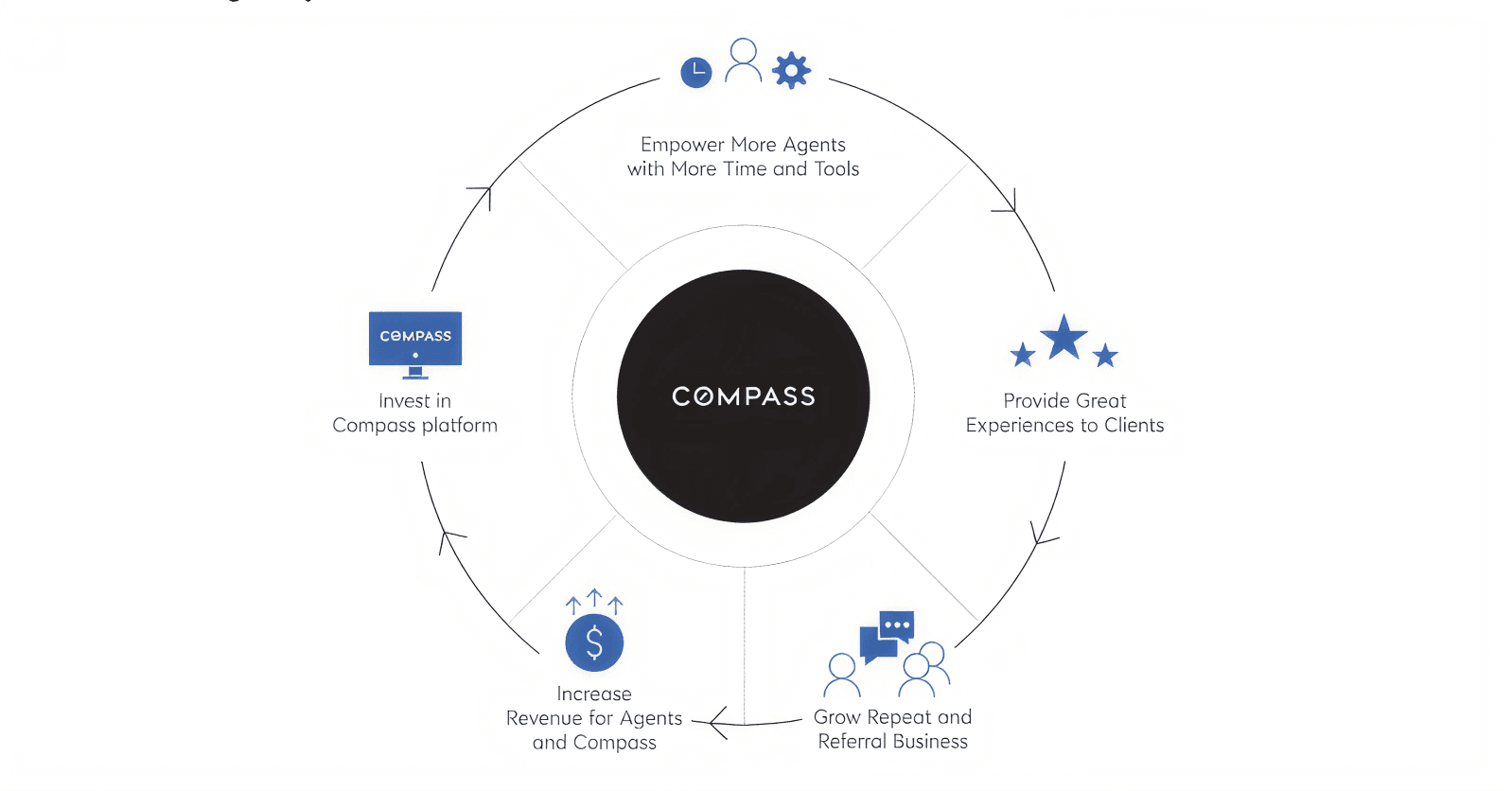
The design process focused on creating a centralized workspace where real estate agents could accomplish the project goals.
After assessing the project's goals, I suggested an Object Oriented UX Process. By grounding the design in the objects agents rely on every day, the platform could move beyond a collection of disconnected tools and become a more integrated system for managing an agent’s business.
Establishing Project Goals and KPIs
01
Enable Management
Manage people, listings, documents, and events in one place.
02
Enhance Communication
Send, receive, and save communications related to clients, collaborators, and portfolio contacts.
03
Project Management
Track outstanding tasks, critical dates, appointments, and special events.
04
Organization
Organize people and properties into meaningful groups to support relationship management and transaction workflows.
Design Methodology
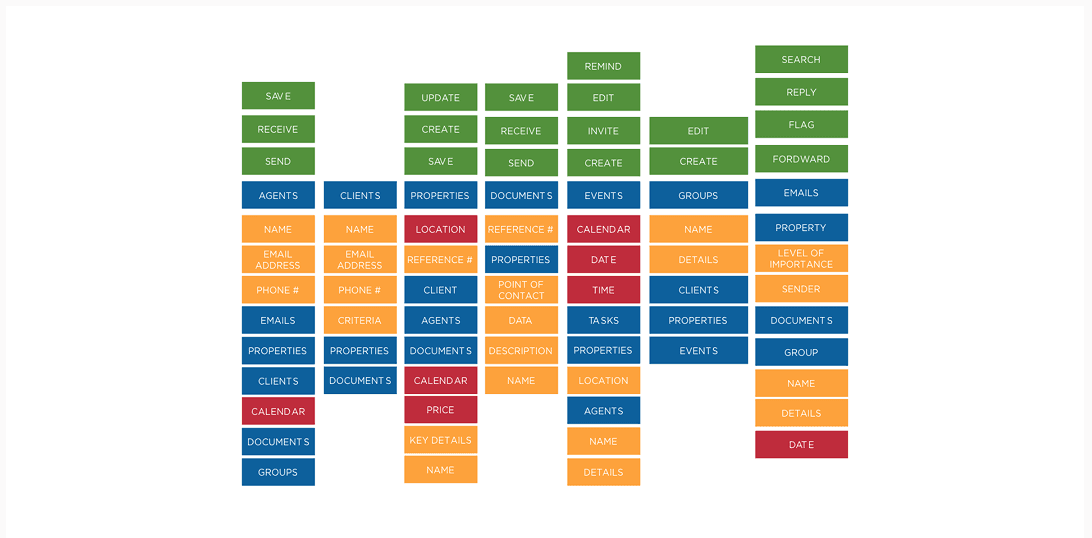
This approach was especially useful because agents manage many moving parts at once. Their work is relationship-driven, time-sensitive, and highly contextual, so the product needed to make complex information easier to understand, prioritize, and act on. I translated these objects into the initial wireframes.
Wireframes
The team translated the OOUX map into lo and hi fi wireframes. We then conducted user testing with agents at compass to ensure the design was meeting the project goals.

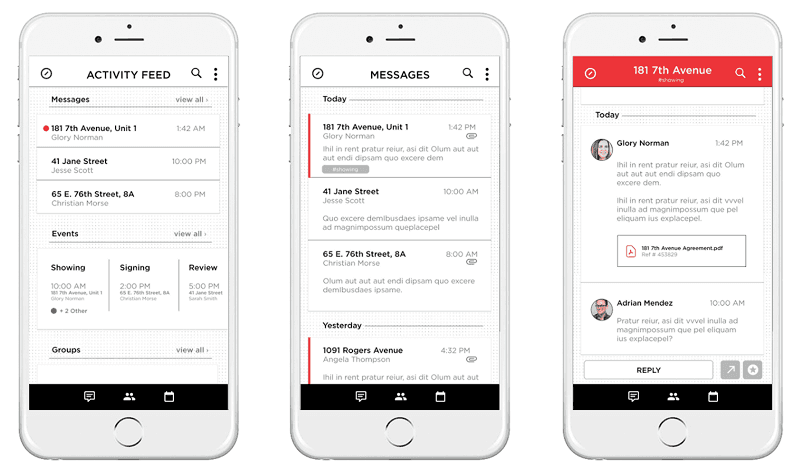
The Solution
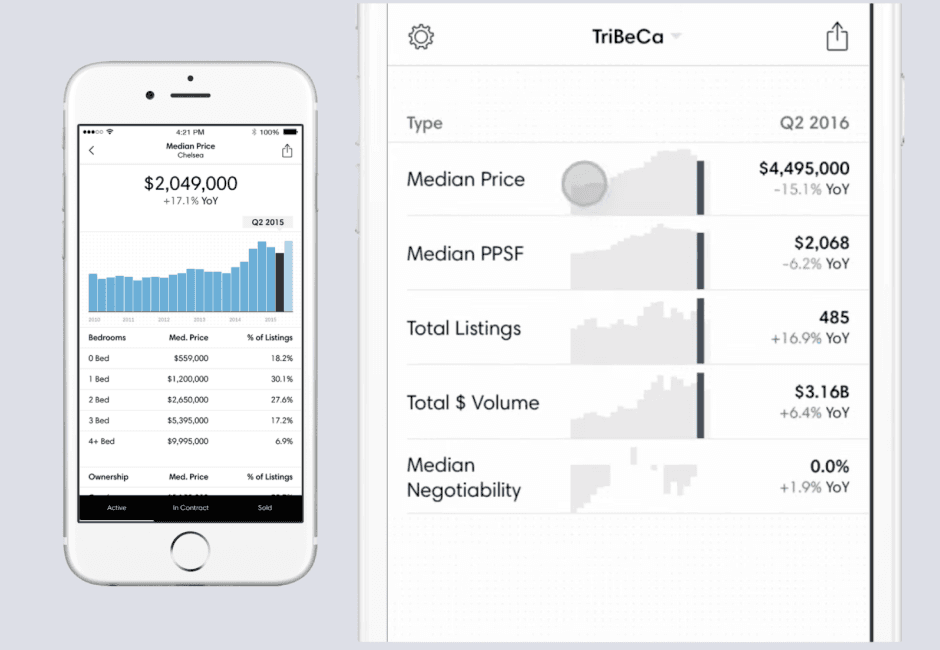
The Compass Markets App was the first mobile app to provide consumers and agents with real-time, neighborhood-specific residential housing analytics.
It allowed users to access recent transaction data and historic sales trends directly from their iOS devices.